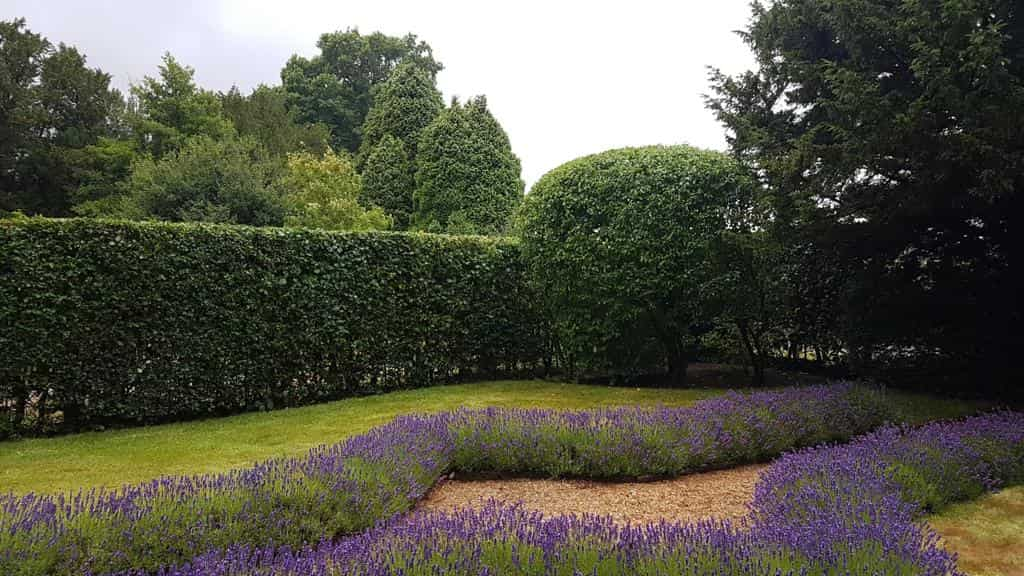
A well-maintained hedge can provide privacy, shelter and an attractive garden boundary. Without regular cutting, however, it may gradually become too tall to reach safely, too wide for the available space or too dense to maintain with ordinary equipment.
For property owners in Winchester, Hampshire, an overgrown hedge does not always need drastic cutting. The appropriate approach depends on its species, condition and the amount of established wood within it. Professional assessment can determine whether it should be trimmed, reduced in stages or reshaped more extensively.
Signs That an Overgrown Hedge Needs Professional Attention
A hedge usually becomes difficult to manage gradually. Regular cutting may be missed, vigorous shoots extend beyond the intended outline and the top eventually becomes inaccessible. Identifying the problem before the hedge is severely overgrown provides more options for restoring a balanced shape.
The Top Can No Longer Be Reached Safely
If cutting the top requires an unstable ladder position, leaning across the hedge or handling powered equipment above shoulder height, routine maintenance has become impractical.
Professional hedge cutting uses access equipment appropriate for the hedge and surrounding ground. Reducing the height to a manageable level can also make future maintenance more straightforward, provided the species is capable of responding to the required cuts.
The Hedge Has Taken Up Too Much Garden Space
An expanding hedge can narrow paths, reduce usable lawn space and grow across patios, driveways or planting areas. It may also obstruct gates and make access along the boundary difficult.
Repeatedly trimming only the newest growth may not correct a hedge that is already excessively wide. More substantial side reduction could be needed, but this must be planned carefully because some hedge species do not regenerate reliably from old, bare wood.
Growth Is Becoming Uneven
An overgrown hedge may develop a wavy top, bulging sides or isolated shoots extending well beyond the main outline. This often happens when the most accessible sections are cut regularly while taller or wider areas are left untouched.
Professional reshaping can create a more consistent profile. In some cases, the hedge may need to be corrected over more than one maintenance visit rather than cut back heavily in a single session.
The Lower Sections Are Becoming Thin or Bare
Hedges that are wider at the top than at the base can shade their own lower growth. Over time, this may cause the sides near ground level to become sparse.
Where the species permits, reshaping the hedge so that its base remains slightly wider than the top can improve light distribution. Existing bare areas may not fill immediately, and some species will respond better than others.
Branches Are Becoming Thick and Woody
Routine hedge trimmers are designed primarily for younger growth. When a hedge has been left for several seasons, its internal branches can become too thick for ordinary trimming equipment.
Forcing unsuitable tools through mature stems may leave torn cuts and an uneven finish. Professional reduction can remove heavier growth with equipment suited to the branch diameter while retaining a workable framework where possible.
The Hedge Is Obstructing Light and Views
A hedge that has grown well above its intended height can cast extensive shade across a garden and reduce light near windows or seating areas. Simply removing a large amount from the top may not produce the best result if the sides have also become too broad.
A balanced reduction considers the complete structure of the hedge. The aim is to improve its scale and shape without removing more foliage than it can tolerate.
It Requires Cutting Too Frequently
Some hedges grow vigorously and need repeated attention during their active growing period. If the hedge seems unmanageable soon after every cut, the existing dimensions may be too large or the trimming method may be encouraging dense outer growth.
A planned reduction followed by a suitable maintenance schedule can make the hedge easier to control. The frequency will depend on the species, the desired appearance and the rate of seasonal growth.
There Is Excessive Dead or Congested Growth Inside
Dense hedges can accumulate dead twigs and congested branches within their interior. This material may be hidden behind the outer foliage and only become apparent during cutting.
Selective removal can improve the structure and make the hedge easier to inspect. Large areas of dieback, unusual discolouration or sudden thinning should be assessed before routine trimming, as they may indicate a wider health problem.
Can Every Hedge Be Cut Back Hard?
No. Different species respond very differently to substantial reduction. Many broadleaved hedges can produce new growth from older wood when cut appropriately. Certain conifers may remain permanently bare if cuts extend beyond the green foliage.
Before reducing an overgrown hedge, it is important to identify:
- The hedge species
- Where living growth remains
- The thickness of the internal branches
- The amount of height and width to be removed
- Whether the reduction should be completed in stages
- The desired size for future maintenance
This assessment helps avoid a result that is smaller but permanently sparse or uneven.
Why Gradual Reduction May Be Better
When a healthy hedge is substantially oversized, reducing it over several stages can sometimes produce a better result than removing a large amount at once. A staged approach allows new growth to develop before the next section is corrected.
This is not necessary for every hedge, but it can be valuable where a severe one-off cut would expose extensive bare wood or place unnecessary stress on the plants.
What Professional Hedge Maintenance Should Achieve
Professional hedge work should create a defined shape that suits the surrounding garden and can be maintained realistically. This may involve reducing height, narrowing the sides, removing heavy shoots and correcting uneven sections.
The final size should take account of how quickly the hedge grows back. Establishing an appropriate maintenance schedule afterwards is essential, as one reduction will not prevent vigorous species from becoming overgrown again.
Conclusion
A hedge may need professional attention when it has become unsafe to reach, taken up too much space or developed thick, uneven and difficult-to-cut growth. The best solution may be routine trimming, staged reduction or more extensive reshaping, depending on the species and condition.
If your hedge has become difficult to manage in Winchester, Hampshire, contact LM Tree Surgery Winchester to arrange an assessment. We can recommend a suitable approach to restore a practical shape and make future maintenance easier.
Call us on: 01962 571 792
Click here to find out more about LM Tree Surgery Winchester
Click here to complete our contact form and see how we can help with your tree needs.